Discover the surprising parallels of a Buddhist retreat and World Cup
As a 2026 World Cup volunteer in Vancouver, BC, I went straight from facing raucous stadium crowds to a weekend Buddhist retreat that highlighted meditation and periods of silence. What am I doing? I thought. These are two wholly different worlds.
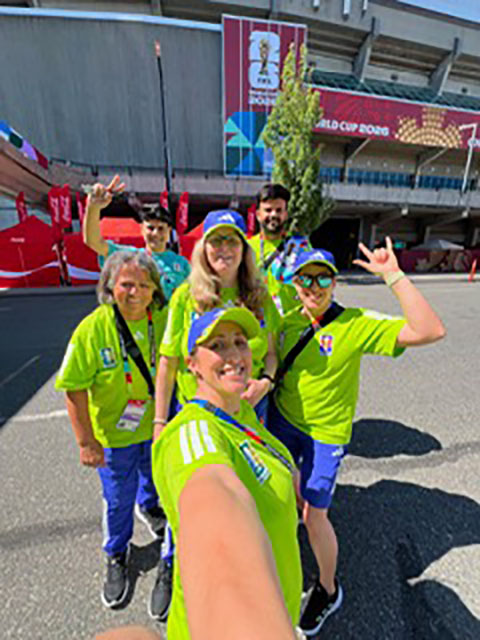
Yet, once at the retreat near Whistler, BC, I discovered more similarities between these two events than I would have ever realized. Firstly, as World Cup volunteers, we were encouraged to use an app to recognize and appreciate fellow volunteers who provided a memorable act of kindness or thoughtful service. We could share a brief, online story that all of this year’s World Cup volunteers could read. The focus was on a moment, otherwise overlooked or taken for granted, often just between two people. It didn’t have to be something huge or dramatic.
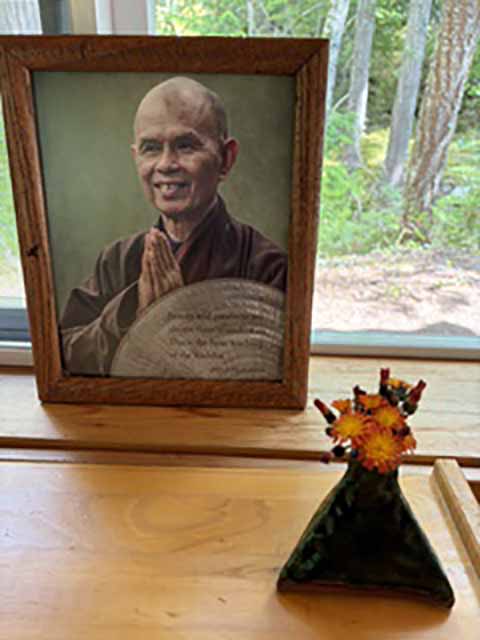
For me, this echoed the practice of “watering the flowers,” as defined by the late Zen master Thich Nhat Hahn (“Thay”): sincerely telling others what you appreciate about them. As a member of a sangha based on his teachings, I strive to express mindful gratitude whenever possible, knowing that the more mindfulness I can bring to a moment, the more my heart will open to the gifts found in any encounter, whether with nature, people or any living creature.
Each sangha member is a tree
Secondly, the emphasis of our volunteer time was to think as a team, to lean on other team members to find a solution to a problem and to work in tandem with others. For instance, if we older volunteers couldn’t find or figure out something on the various apps we used, younger volunteers jumped in immediately to help, either in person or through our Whats App thread. No judgment. No shame. No recriminations. And we were free to make mistakes without rebukes or finger-pointing. What a gift, especially for someone like me, who has worked alone in self-employment for years with a long-embedded philosophy of self-reliance.
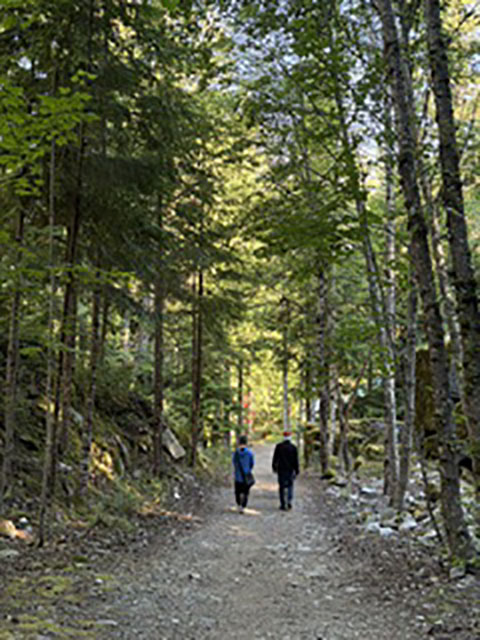
This principle of there-is-no-I-in-team parallels the building of a Buddhist sangha or community, which emphasizes individual transformation through collective energy. As Thay states in Joyfully Together: “Each member of the Sangha is a tree standing beautifully alongside the others. Each tree has its own shape, height, and unique qualities, but all are contributing to the harmonious growth of the forest.” He stresses the concept of inter-being, that we are all innately connected to everyone and everything around us. You cannot remain separate from the world around you. Nothing exists all by itself.
Care within both groups brought poignant moments
As a World Cup volunteer and retreat attendee, I found that both group processes reflected spontaneous caring for others. While on the pitch with a group of volunteers during an opening ceremonies rehearsal at BC Place stadium, preparing for the first game of Australia vs. Turkey, I began to tear up. I was thinking of my late husband Frank, who so loved soccer and would have been thrilled to watch these proceedings and the games. Liz, a young volunteer standing a metre parallel to me, noticed my expression right away. She asked if she could give me a hug after I explained the reason for my tears. Her immediate recognition of my feelings and offer of support meant a lot.
During a walking meditation at the retreat, 20 of us slowly followed a path through forest, stepping over downed trees and protruding roots. At one point, a participant in his eighties fell on the trail. With no hesitation, the 17-year-old male in front of him turned and helped him up while at least three others behind the grey-haired elder rallied to guide him back up on his feet. Such instant care and communal response made this a poignant moment. Later, I thanked the man who fell. I told him that for me, the incident reinforced that we are all in this world together. It was an impromptu teaching.

A bell and phone pings bring reminder of connection and embracing all
On the retreat and in our weekly sangha, the sound of a bell represents mindfulness and ultimate wisdom, the voice of the Buddha in body, speech, and mind, in perfect oneness. When rung during a walking meditation, it serves as an anchor to bring our wandering mind back to the present moment. Bell-ringing indicates the start and end of meditation periods and dharma talks.
As Media Operations volunteers for the World Cup, we maintained two ongoing WhatsApp threads, one for soccer match days and one for non-match days. Every time someone posted a remark on either thread, however mundane or inane, I’d hear a resonant ping. Admittedly, I often found this irritating, especially if it was late at night and someone just wrote “thank you.” In daily life, I prefer my land line to a cell phone and do not text regularly. Living alone, I’m used to a lot of silence, not repeated audio interruption.
However, I began to think of this ping as akin to our sangha bell. It brought me back to the moment, and reminded me that I was part of a greater whole, a group that was working together with shared goals to produce positive results. In Thay’s words: “The capacity to be inclusive and embrace everyone in the Sangha body is the basic quality of a Sangha builder.”
Hence, I learned a lot more as a World Cup volunteer than I ever expected, and these teachings had nothing to do with sports. Rallying around “the beautiful game,” we created community and new connections with people of all ages representing nations from around the globe. It was a powerful reminder that, despite our differences, we are all one.
Today at 1:25 pm