Heather Conn Blogs

spoutin’ about by the sea

Recommended books on dying

This is my first and probably last post of the month. I haven’t felt much like writing online. My father is dying of terminal cancer: multiple myeloma. Last week, I went to see him  in the hospital in Guelph, Ont. and got him into a hospice. I felt grateful that he knew me. 

Despite the synthetic morphine he was receiving through a pain pump, he had lucid periods and sounded off on a number of things, from the hospital’s penny-pinching in its medical care to his dislike of the choice of juices offered. We spoke directly and he made ironic comments. I was delighted to discover that his sense of humour remained beneath his delusions.


Now that I’m back home on the west coast, thousands of miles from my dad and the hospice, it feels more challenging to deal with his pending death. However, I have three books to recommend for others who are coping with someone dying:

1.  FINAL GIFTS (Bantam 1997) 

A friend of mine who’s a palliative care nurse recommended the book Final Gifts: Understanding the Special Awareness, Needs, and Communications of the Dying, by Maggie Callanan and Patricia Kelley. The co-authors, two hospice nurses, share their experiences with a variety of terminally ill patients of all ages. Here are the most valuable things I learned from this book:

  • People who are dying speak in symbolic language: When someone is ready to die, he or she will often use a metaphor regarding travel or going on a trip, something like “I need my passport.” It’s easy for family or friends to dismiss this as gibberish or a delusion, but it’s actually the patient’s way of saying: ‘I’m ready to go.” People dying will often use a metaphor from their line of work; hence, a pilot will ask about his plane.


  • People dying will see dead loved ones: The dead loved ones might appear to the patient in the room, sitting at the end of the bed. The person dying might converse with someone the family can’t see or reach out to touch someone from their life who has been dead a long time.


  • Those dying might share dreams that relate to death: People dying will sometimes share a recent dream that contains symbols related to dying. For instance, the dream might show a loved one who died years earlier or portray the dying person preparing for a trip.


This book helped me to stay more attentive to my father’s words and look for possible clues as to what he might be trying to say.


 2)  THE GRACE IN DYING: HOW WE ARE TRANSFORMED SPIRITUALLY AS WE DIE (Harper San Francisco 1998)

My cousin, who cared for my uncle (my dad’s  brother) while he was dying, recommended this book to me. I truly appreciate its perspective: author Kathleen Dowling Singh presents death as the final part of a continuous life journey towards the True Self, shedding ego and personality in transformation to merge with Spirit.

Singh draws on her extensive knowledge of transpersonal psychology and spiritual/religious traditions to address death in symbolic and archetypal terms, shifting from the usual perspective of death as a source of fear and tragedy to a glorious state of grace and surrender to Ultimate Love.

I really like the Buddhist and Tibetan viewpoints of life and death as levels of consciousness that Singh addresses, along with her mention of ego’s shadow and persona, Carl Jung’s sense of subpersonalities, and the search for Unity Consciousness. The view of life and death she outlines, including the ego’s constant attachment to protecting its own “identity project”, is in sync with my own beliefs and the spiritual practices that I have followed and learned from in recent decades.

The author works in a large hospice in southwest Florida and regularly talks to groups about death, dying, and the hospice movement. She, too, includes anecdotes about different terminally ill people she worked with and how they faced dying and death.

My cousin told me that for the final two days of his life, her dad wore an expression that she characterized as “deep joy.” She felt that he was already in touch with dead loved ones and was ready to greet them in the afterlife.

This book reinforces what an honour and spiritual gift it is to stay present with someone dying and to be with them when they pass.


3.  DYING WELL: PEACE AND POSSIBILITIES AT THE END OF LIFE (Riverhead Books, 1997)

Written by medical doctor Ira Byock, this book begins with a chapter on the dying and death of his own father. The author presents a loving, open portrait of his dad and discusses the challenges he had in caring for his father both as a son and as a physician.

Byock writes about his dying patients with love and compassion, and discusses with sensitivity all matters related to the dying and caregiving process. He acknowledges how impersonal his medical training was in handling the dead and dying. Before hospice care had begun in the U.S., he started an informal program in a hospital to help people “die well” with respect, comfort, and even happiness.

Byock has served as president of the American Academy of Hospice and Palliative Medicine and is director of a Robert Wood Johnson Foundation national program to improved end-of-life care.
September 26, 2010 at 7:27 pm Comments (0)

Stop your censorship, BC Ferries

annabel-lyon-low-res
                                 Annabel Lyon
                                                      — Heather Conn photo

It shocked me this week to discover that BC Ferries has banned the sale of Annabel Lyon’s award-winning book The Golden Mean on its ferries. That’s outrageous!


The novel, which tells of Aristotle serving as tutor to Alexander the Great, has a cibachrome photographic image on its cover: a naked man lies face down and bareback on a white horse, viewed from the side and overhead.

untitled-scanned-01


Deborah Marshall, a BC Ferries spokeswoman, told the Aug. 27 Vancouver Sun (they were actually scooped by Agence France-Presse) that the private, British-Columbia-wide company chooses “non-controversial” and “family appropriate” books in their gift shop. I guess that must be why they carry so many fashion magazines with covers showing women’s cleavage popping out and men’s sports magazines that show jocks in such form-clinging swimsuits that they might as well be nude. 


An artsy photo on the cover of a creative work is deemed obscene, while magazines sold on BC Ferries carry photos of barely clad models, both male and female?  This is a case of ridiculous censorship.


A BC Ferries committee apparently chooses the books that appear in the ferry bookstore. Do its members also choose the magazines for sale in the same area? I haven’t looked lately, but I’d certainly guess that they carry Playboy and similar publications. Images of nude women are okay but not ones of men?


BC Ferries reportedly has a tradition of banning books that feature any nudity, according to The Vancouver Sun. In recent years, this has included Wreck Beach, a history’s of Vancouver’s nude beach, and Stephen Vogler’s Only in Whistler, which includes a historical photo of four nude female skiers shown from behind.


It’s time to grow up, BC Ferries. The image on this book cover is innocuous and not presented in any context that suggests lewdness, pornography, exploitation, or abuse. If you ban this book, then you’ve got to ban every media ad in your magazines that objectifies a man or woman and depicts him or her either partially or not-at-all clothed.


Banning Lyons’ book for any reason is preventing potential readers from enjoying a well-researched and top, original piece of historical fiction. Her book won Canada’s Rogers Writers’ Trust award and was nominated for our country’s two other highest literary recognitions, the Giller Prize and the Governor General’s Award. Lyon and her publisher, her book and its readers, deserve far better treatment than what BC Ferries has given them. Shame on you.

August 31, 2010 at 7:05 pm Comment (1)

Congrats, Mike, for Special Olympics writing success & ribbons

mike-oswald-resized1
                                                       — Heather Conn photo

I feel honoured to give recognition to one of my writing clients, Micheal Oswald, 28, who recently won a 2010 Writers Award and trophy from the Special Olympics on the Sunshine Coast (SOSC).


Michael, a Special Olympics athlete and volunteer,  received the trophy at a Special Olympics awards banquet held June 26 at the Gibsons Legion.  The budding reporter won acclaim for his fundraising efforts and coverage of the Sunshine Coast Special Olympics in Amateur Sports News, an Edmonton, AB-based publication that has operated since 1979.


This marks Michael’s first published article and byline and he has since written a second feature in the same newspaper.


“I didn’t expect this [award],” says Michael, a resident of Roberts Creek, BC. “I felt happy to have something published. It’s pretty darn inspiring and has inspired me to keep going.”


In his article in the spring 2010 issue of Amateur Sports News, Michael explains how vital an organization like SOSC is for people like him who have developmental disabilities. (Michael has a developmental disability caused by Fetal Alcohol Spectrum Disorder.) He writes:


Had it not been for Special O., I might have never done any sports at all. School could not provide the right environment fo me to take part in athletics. No one could understand my needs. I felt that I was ostracized and out of place in the gym.

In Special O., the coaches and volunteers are trained to work with people who have special needs. . . When I find difficulty with certain aspects of the game, they demonstrate and teach me in a way that I can understand. They are always calm, encouraging, and warm.  


In the same feature, Michael writes that his practices are the highlight of his day. He adds: “The love and friendship is more rewarding than any wage in any professional association. . .[T]hrough this wonderful organization, we can complete any goal and attain any dream.”


Besides his writing achievements, Michael took home a third-place medal and two second-place medals at SOSC swim meets last winter in Vancouver and Powell River. Special Olympics on the Sunshine Coast comprises eight sports: basketball; softball; swimming; track and field; soccer; curling; rhythmic gymnastics; and golf. Forty local athletes and 50+ coaches and volunteers participated this year.


Congratulations, Michael. You deserve it. It’s been a delight to work with you on your young adult story that addresses self-esteem, the love of family, and the impact of bullying. I look forward to seeing it in print. I have enjoyed teaching you over the years and hearing your poems and spontaneous abilities with words. Here’s to continued success with your writing.

August 8, 2010 at 4:10 pm Comments (2)

Typos: a chuckle or irritant?

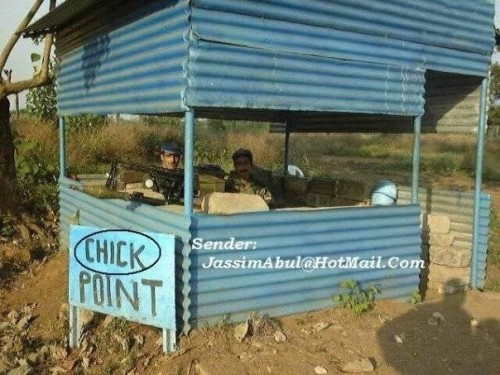
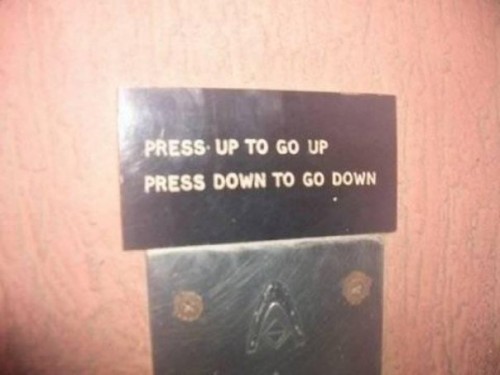
As a long-time writer and editor, I am horrified by common abuses of the English language and punctuation, like the far-too-common error of spelling the possessive form of “its” with an apostrophe. Yet, I also find great humor in unintentional typos or mistranslations, especially when travelling. Here are some of my favorites from menus and signs in India and Nepal:


child beer (rather than “chilled”)

biled potatoes (rather than “boiled”)

Please don’t pluck the flowers

You look good from hotel view


Some quaint terms posted on the Internet include these foreign gems:

pic19647

pic20932

 pic229261

                                                    (Apology to photographers: no photo credits provided)

However, you don’t have to travel to another country to find such groaners. At an apartment complex in Vancouver, BC, I saw a notice advising residents to go to “the area of refuse” in case of a fire. For years, Jay Leno has offered outrageous headline bloopers, sent in by people across North America.

Do you have any favorites? Please share them.

July 26, 2010 at 12:44 pm Comments (0)

Nine Creeker readers; nine jailed journalists

reading-night-resized

Author Gillian Kydd (right) and yours truly at the July 17 Gumboot Cafe readings

                                                                                                                          — George Smith photo

From the traffic mayhem of eyelash mites to erotic prose and historical fiction, nine Roberts Creek writers read an eclectic mix of creative prose July 17 at a fun launch/benefit.


Think globally. Read locally!, a special evening organized at the Gumboot Cafe by Jane Covernton, was a wonderful opportunity for an overflow crowd (about 60) to hear the voices and visions of these local writers:

  • Joanne Bennison: journalist, screenwriter, and young adult novelist
  •  Myself: “who likes to write true stuff best and is working on a scandalous family story”
  • Jane Covernton: self-published fiction writer who launched her third novel, The Modern Age, that evening
  • Rebecca Hendry: author of the novel Grace River, who has published short fiction in numerous Canadian literary magazines
  • Caitlin Hicks: an international playwright and performer and writer of fiction, nonfiction, drama, and comedy; her film Singing the Bones, produced on the Sunshine Coast, is celebrating its 10th anniversary
  • Gillian Kydd: author of Secrets of the Creek, a mystery set in Roberts Creek
  • George Payerle: author of two novels and two books of poetry
  • David Roche: an international performer and author of The Church of 80% Sincerity
  • Robin Wheeler: author of fiction and nonfiction books such as Gardening for the Faint of Heart

Each of us had 10 minutes to read, after drawing numbers from a hat to determine our order of appearance. (George was kind enough to swap with me so that I became #3 instead of #8.) It felt great to share in such a community-minded event with fellow writers and hear what each of us is working on. A number of writers stretched beyond their familiar genres and read new material. Some shared local content, from Gillian’s Secrets of the Creek to George’s comical account of a night at the Roberts Creek Legion.


Donations at the door raised $211.25 for PEN, the international organization that supports writers jailed for their published material. The event honored Dawit Isaak, co-owner of an independent newspaper in Eritrea and one of nine journalists imprisoned since 2001. Four of the reporters have since died in jail. As a symbolic gesture, Jane displayed an empty chair, bearing Isaak’s photo, next to the speaker’s platform.


Many thanks to Jane for organizing this event as a grassroots local occasion with a global rights-to-writers action, and for providing a book-sales table, sound equipment, stage, advertising materials, etc. Thank you to all the writers who participated, to Joe for allowing us to hold this event at the Gumboot, and to all the friends, family, and community members who attended. I hope that this becomes an annual event.


July 25, 2010 at 11:25 am Comments (3)

Sam Mandala’s memory flows on

I love the synchronicity of the Internet. Last summer, I posted a whimsical entry about the wooden salmon art piece I did called “Sam Mandala,” which played on the word “salmon” and used mandala images as a theme. Well, it turns out that there was a real Sam Mandala, an Italian born in the Bronx. His granddaughter Melissa had Googled his name, and wound up on my blog. Who woulda thunk it?


She said that she loved my fish mandala and wanted to know if it was for sale. (It’s not. It was auctioned off and I have no idea who bought it.) She added: “[I]t describes my grandfather’s personality to a ‘t’.”


When Melissa emailed me about this, I was skeptical, having been victim of an Internet job hoax several months ago. But I did my own online research before responding and yes, she did exist. When I asked to find out more about her grandfather, here is what she sent in a reply:


“I’m from New Jersey, my grandfather was born in the Bronx, then moved to Newark, NJ. His parents and oldest brother were born in Sicily. His brothers were deviants, his brother Paulie was a bookie and his other brother was the type to steal and then fence the items.


Grandpa followed a different path. He married Grandma and then went to war in Korea. There are so many pictures where he’s kissing and hugging and holding Grandma on his lap. Every photo, he has a huge smile. I remember when I’d spend the night, he would wake up first, brew coffee, and bring it in to Grandma while she was in bed. He spoiled her and it was cute. Everyone in his senior citizen apartment building knew who he was because he would talk to everyone, but never got involved with drama or gossip. He always had a joke on hand. I think, maybe, he was a bit of a flirt!! So, that’s Sam Mandala as I remember him . . .”


What a wonderful story. I encouraged Melissa to write about her grandfather since so many family stories and reminiscences disappear, never told. That’s one reason why I’m writing a memoir and encourage others to do so through my workshops. Thanks, Melissa, for sharing a touching tale. I’m grateful that your grandpa’s memory ended up prompting you to contact me.

March 31, 2010 at 10:15 am Comments (0)

Crozier’s confidences spark A Prairie Memoir

Last night, I heard Lorna Crozier, Canada’s poetic gem and a Governor-General’s-Award-winner, read from several of her books, including Small Beneath the Sky: A Prairie Memoir. It always intrigues me to hear how skilled poets create evocative nonfiction prose. Their incisive attention to a moment, honed in poems, seems to bring  a fresh strength to prose writing. I can’t remember the specific lines that Crozier read that startled me with brilliant sensory detail, but the talent of her words had me experiencing the world as if peering through a carefully placed telescope with a sensitive yet powerful lens.


I can appreciate how growing up in the Prairies has shaped Crozier’s life and sensibilities, and love that she articulates how one’s soul can bond to a particular landscape. Her sentiments made me think of Sharon Butala’s deep sense of  connectedness with the prairie earth and sky. Yet my own sense of shimmering kinship with nature rests with the ocean and mountains in the Pacific Northwest. Unlike prairie people who often consider mountains claustrophic, I find looking at, and being in, them exhilarating and expansive.


In honor of Earth Day, the Sunshine Coast Arts Centre in Sechelt, BC where Crozier read, turned off all of its lights except for a few overhead ones that enabled her to see to read. Kudos to them for taking this initiative. Listening to her read in semi-darkness, with candles flickering, gave her words even greater impact.


Although I have not yet read her memoir, I know that in it, Crozier addresses her childhood of poverty and her father’s alcoholism. During the Q&A, I asked her if she had concerns about the ramifications within her family of exposing their “secret” of alcoholism. She said that she regretted the hurt this revelation caused her mother, and shared a related story. Unbeknownst to her, during a church service in her home town of Swift Current, Saskatchewan, someone read aloud an excerpt that mentioned the drinking of Crozier’s dad — and the author’s mother was in the audience. This was her mom’s first awareness of such content.


This account gave me pause, since I am writing a memoir about a family secret and am concerned about how much it will hurt my parents upon publication. But my consideration of this issue is not enough to spur self-censorship. I need to tell my own truth.

March 28, 2010 at 5:54 pm Comments (0)

Shane shone at Vancouver’s Spoken World

seth-low-res-2

Childhood bullying. A first kiss. Painful nicknames. B.C. slam poet Shane Koyczan shared life’s nasty jabs and quiet tenderness at last week’s sold-out Spoken World event in Vancouver, BC. The gentle wordster, best known for his rousing poem about the essence of Canadians at the opening ceremonies for the 2010 Winter Olympics, recited heartfelt poetry as if confessing intimacies in a cafe tete-a-tete, not facing an audience at Granville Island’s Performance Works.


Whether talking informally onstage to the 300 guests or reciting words from one of his youthful journals, Shane gave the bumps and beauty of his life a courageous tribute. This man peels back his soul and feels. Even without his untucked brown shirt, jeans, black cap and broad arm gestures, any listener could quickly see and hear that Shane was no slick, surface showman. He described a lover’s thighs and body softness with such fond detail and devotion that you knew he’d easily get an A for sensual attentiveness.


Shane still sounded hurt from a lover’s betrayal but crafted his angst into a clever, revenge-fuelled haiku called Herpes. Overall, he celebrated a pithy spirit, not self-pity. A highlight was his moving poem about sharing a hospital room for five days with a nine-year-old boy, a cancer patient. When he asked the boy if he was scared, the kid replied:  “Fuck, yeah” and then added: “But don’t tell my dad.” Shane’s  tears in reciting this poem didn’t seem like the appear-on-demand kind.

shane-performing-low-res

It was heartening that during the sports glitz of the Olympics and his recent global performance, Shane appeared without fanfare or any mention of his poetic feat at the opening ceremonies. Percussionist Sal Ferraras and his jazz band Poetic Licence added great spontaneous riffs and accents to Shane’s words and those of the evening’s three other performance artists.


Ivan E. Coyote, a Vancouver author and screenwriter, was another standout with her touching story about falling in love with a beautiful, smart woman ten years younger. Although smitten at first sight, Ivan initially feared their age gap was too vast and she didn’t want to be a “pussy crook.” It took five years before the two became a couple.


Ivan described a car ride filled with slam poets en route to Surrey for a public reading. When one encouraged her to read her love poem, Ivan was incredulous. She figured that conservative Surrey, whose school district has banned books about same-sex unions,was not the place for an articulate dyke with a tattooed bicep, who feels at home in jeans and a motorcycle-emblemed black T-shirt,  to profess her passion for a woman.


I found the work of the other two poets, Skeena Reece and California resident Ariana Waynes, less honed and rooted more in reactive emotion than skilful, thoughtful summary of experience . Skeena opened the evening, pulling her pony tail out and letting her hair and anger fly. Her throaty-voiced singing and gutteral cries were a compelling strength of raw power and direct-action motivation.


I enjoyed the spirited language of her poem Vulture Olympiad,  which used the refrain “Chomp, chomp” to condemn many aspects of the Vancouver Olympics exploitation. Although I agreed with her sentiments, her presentation seemed more like a cheerleading rant than an inspirational call to action.


Her line “I want to love Canadians but they make it hard for us” epitomized her rebuke of this nation’s poor treatment of  First Nations people and the city of Vancouver’s  disregard of  those on the Downtown Eastside. However, I’d still prefer to hear a poem that seeks solutions, evoking an alignment of shared values and social outcomes, than one that sustains race-based duality and divisions.


Ariana Waynes, the last poet of the evening, introduced herself as “bisexual polyamorous.” Enough said. She tossed off brash lines of impersonal coupling, flouting her diverse repertoire of sexual conquests. Seemingly preferring quantity to intimacy, she spoke flippantly of rape and asked: “Who hasn’t been abused?” She seemed exultant over, and empowered by, her many sweaty and sultry encounters, yet I couldn’t help wonder: “Where and how does love fit into this?” Her poetry seemed too skewed for shock value for my liking, her delivery too self-admiring to offer any hint of deep, universal connection.


Nevertheless, she drew out audience demographics that people rarely share at public events. She asked people to raise their hands to questions such as “Who has been in a bi-racial relationship” and “Who has been in a same-sex relationship?” A sprinkling of arms went up in both cases. For determining one’s company, this sure beat the usual age-and-income questions found on most surveys.


Hats off to Hal Wake, artistic director for the Vancouver International Writers Festival, for offering such a night of provocative poetry matched with captivating jazz. And many thanks to the guy at the ticket centre who, after telling me the show was sold out, kindly phoned me back about five minutes later and said that ten tickets were suddenly made available. What a thoughtful gesture.

February 21, 2010 at 9:31 pm Comments (3)

Neologisms: getting away with words

 
I love reading the winners of The Washington Post‘s annual neologism contest, in which readers  supply alternative meanings for common words. Here are the recent winners: 

1. Coffee (n.), the person upon whom one coughs.

2. Flabbergasted (adj.), appalled over how much weight you have gained.

3. Abdicate (v.), to give up all hope of ever having a flat stomach.

4. Esplanade (v.), to attempt an explanation while drunk.

5. Willy-nilly (adj.), impotent.

6. Negligent (adj.), describes a condition in which you absentmindedly answer the door in your nightgown.

7. Lymph (v.), to walk with a lisp.

8. Gargoyle (n), olive-flavored mouthwash.

9. Flatulence (n.) emergency vehicle that picks you up after you are run over by a steamroller.

10. Balderdash (n.), a rapidly receding hairline.

11. Testicle (n.), a humorous question on an exam.

12. Rectitude (n.), the formal, dignified bearing adopted by proctologists.

13. Pokemon (n), a Rastafarian proctologist.

14. Oyster (n.), a person who sprinkles his conversation with Yiddishisms.

15. Frisbeetarianism (n.), (back by popular demand): The belief that,when you die, your soul flies up onto the roof and gets stuck there.

16. Circumvent (n.), an opening in the front of boxer shorts worn by Jewish men. 

The Washington Post‘s Style Invitational also asked readers to take any word from the dictionary, alter it by adding, subtracting, or changing one letter, and supply a new definition.
Here are this year’s winners:

 
1. Bozone (n.): The substance surrounding stupid people that stops bright ideas from penetrating. The bozone layer, unfortunately, shows little sign of breaking down in the near future.
2. Foreploy (v): Any misrepresentation about yourself for the purpose of getting laid.
3. Cashtration (n.): The act of buying a house, which renders the subject financially impotent for an indefinite period.
4. Giraffiti (n): Vandalism spray-painted very, very high.
5. Sarchasm (n): The gulf between the author of sarcastic wit and the person who doesn’t get it..
6. Inoculatte (v): To take coffee intravenously when you are running late.
7. Hipatitis (n): Terminal coolness.
8. Osteopornosis (n): A degenerate disease. (This one got extra credit.)
9. Karmageddon (n): it’s like, when everybody is sending off all these really bad vibes, right? And then, like, the Earth explodes and it’s like, a serious bummer.
10. Decafalon (n.): The grueling event of getting through the day consuming only things that are good for you.
11. Glibido (v): All talk and no action.
12. Dopeler effect (n): The tendency of stupid ideas to seem smarter when they come at you rapidly.
13. Arachnoleptic fit (n.): The frantic dance performed just after you’ve accidentally walked through a spider web.
14. Beelzebug (n.): Satan in the form of a mosquito that gets into your bedroom at three in the morning and cannot be cast out.
15. Caterpallor (n.): The color you turn after finding half a grub in the fruit you’re eating.
And the pick of the literature:
16. Ignoranus (n): A person who’s both stupid and an asshole.


January 17, 2010 at 2:12 pm Comments (0)

Media

Feature writing my favourite

Ever since learning to read and write, I knew that I wanted to live in the world of words. As a child, I wrote stories on my mother’s typewriter, kept a journal, made mini-newspapers, and loved to visit the library.


As a teen, I wrote newsletter blurbs and edited my high school yearbooks. At university, I co-edited the tri-weekly student newspaper and worked as a summer reporter at The Edmonton Journal and The Vancouver Sun.


 Today, I have published in more than 50 books, magazines and newspapers, including The Globe and Mail, The Georgia Straight, Sierra and BC Business magazine. Yet, as a reporter, I soon realized that “hard” news or daily reporting of events didn’t excite my heart. I preferred feature writing, which offered more depth and creative options as a writer.


 Early in my career, at age 21, one small reporting assignment shaped my future work decisions. While at The Edmonton Journal, I was supposed to do a story about a baseball coach who became paralyzed after a member of his peewee baseball team had thrown a bat in anger. The bat had bounced off the ground and hit the coach’s spine, leaving him permanently injured.


 When I phoned the coach for an interview, he selflessly pleaded with me not to pursue the story, insisting that the boy and his family had already suffered enough. His grace and consideration in crisis touched me.


I discussed the situation with my editor, who relented; he said just to include a short paragraph on the incident as a matter of record. I did so and in the process, learned that my priorities would never make me a hard-nosed reporter: I would always place the human factor above getting a story at any cost.


When interviewing people as a professional writer today, I have found myself more intrigued by their personal tales and inner struggles than just recording an external event.


I like to extend compassion and a soulful connection to the people I write about, rather than only find a story angle and maintain so-called objective, professional distance.

November 30, 2009 at 5:49 pm Comments (0)

« Older PostsNewer Posts »