Heather Conn Blogs

spoutin’ about by the sea

Simple spiritual writing can reach all ages

Recently, I was invited to be a guest contributor to the blog Spiritually Speaking, which I didn’t even know existed. It’s produced through the Times Colonist in Victoria, BC. I decided to write about my children’s book and the challenges of expressing spiritual concepts in simple, concrete terms that will be meaningful to kids.

If you’d like to read my post, please click here. I invite you to leave a comment on this blog and/or the Spiritually Speaking one.

In the adult realm, I wrote an essay several years ago called Dharma by the Dozen: The Art of Spiritual Writing. Whether writing fiction or nonfiction, here are a few suggestions for tackling this genre, in particular:

  • Embrace metaphors and similes that relate to the natural world.
  • Apply a light touch.
  • Use simple language.
  • Draw from personal experience.
  • Create images of beauty and resonance.
  • Write to inspire.


, , , ,
February 11, 2012 at 2:45 pm Comments (0)

Utah needs to keep cougar

I usually support politically correct language but the recent decision by a Utah school district to forego the use of “cougar” as a mascot is too much. The district, based in Salt Lake City, thought that using a cougar mascot for a new high school would suggest unwanted connotations with the word’s other meaning: a forty-something woman who sleeps with younger men. Is there some adult projection going on here?

At least three schools in Utah, including Brigham Young University, already use a cougar as a mascot. If conservative Mormons find this acceptable, why can’t it work for a high school? Instead, the district has chosen the bland, more abstract term “Chargers.”

A concrete word like “cougar” carries far more evocative weight and cachet than “charger.” By not using “cougar,” the district is denying teens the opportunity to use the power and symbolism of a sleek and powerful hunter. What’s next? Will stories for young children no longer have a fairy godmother, because “fairy” is a derogatory term for a gay male?

Meanwhile, are there any cougars (the non-human kind) left in Utah?


January 23, 2012 at 3:01 pm Comments (2)

The spark of spiritual travel: find new connections

                                                                                       — photos by Lois Brassart

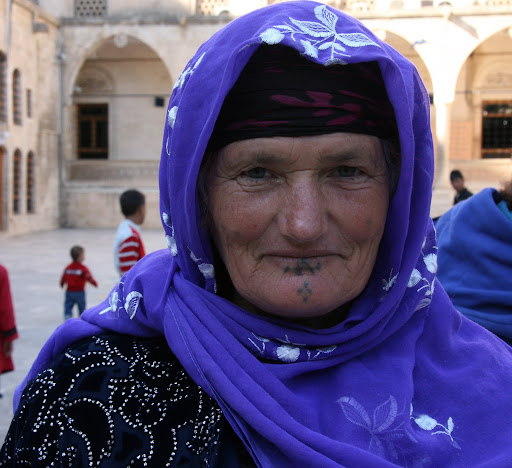
How does spiritual travel differ from regular travel? It can involve a pilgrimage or group meditation, a quest to find one’s inner self in a new environment, or a shared encounter of nature or beauty in a foreign country that opens a deeper gateway to your Soul.


Sometimes, a regular trip can open into a spiritual one through a simple question or casual discussion. A retiree friend of mine, Lois Brassart, was amazed at how one question inspired a whole new connection and relationship with a fellow traveller. Lois was recently in Turkey for “a few weeks of adventure” with a group of strangers as part of an amateur photography trip. On the last day, she was chatting with one of the other trip participants, Cheryl from Australia. Here’s how Lois explains what happened:


“My story starts with Cheryl’s prompt, ‘Talk to me about your spiritual life’ and ends 12 hours later with ‘Do you and Bruce have rituals?’ We [Cheryl and I] learnt more about each other in that one day than we did in the whole two weeks together. Cheryl has lived an amazing life. She has met Mother Teresa. She intentionally built a home with a labyrinth in her backyard and she meditates. She really knows how to connect with people. She walks the talk and believes that we are all amazing people.”
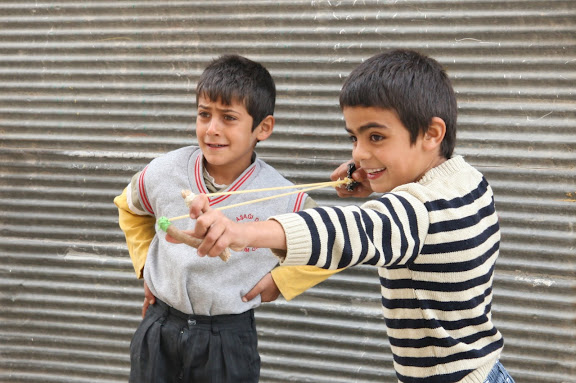
Cheryl’s one comment created a deep, new link to Lois, who shared her own spiritual yearnings and beliefs with her new friend. Without that mutual enquiry, they might never have discovered each other’s inner essence. In Lois’ words: “Cheryl is a woman of rituals, a woman with deep understanding of us humans. I’m a human learning my way, a human who recently joined the ritual, spiritual world after a long stint in corporate life. Meeting Cheryl has made me braver and more willing to take baby steps toward risk.”


After meeting this kindred spirit, Lois says that she and Cheryl opened their hearts to themselves and others, which broke through any language barrier with locals. Previously, their group had emphasized snapping the perfect photo, rather than getting to know each other or the Turkish people.


Cheryl acknowledges the openness that Lois shared in off-the-beaten-track Turkish villages, where their group was invited to share many cups of chai with the locals. She says: “Lois is REAL – what a gift to the world.  Turkish people recognized this fact and so did I.  We  learnt so much about these people with such generous hearts.  Lois would, without exception, touch them with her interest in their garden or their family and of course, she would make them laugh.


“One day, we sat in a bakery, a little cave where women made the most wonderful bread for the community. We simply hung out with three generations of women and girls, used sign language, and laughed.”
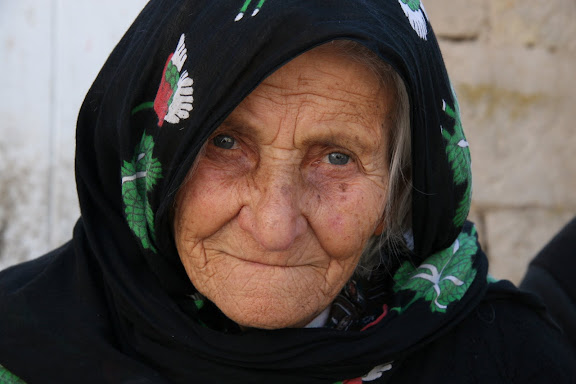
Lois says of her new friendship with Cheryl: “I wondered if this was a fleeting connection. No! We are on email at least three times a week. We share photos, including hers of bees sitting on lavender and of oh-so-cute baby ducks. We share her stories of summer at Christmas and battling 43-degree [Celsius] temperatures and me explaining that I don’t want to go out in the cold and take photos. But I do go out and send along photos of raindrops and reflections in puddles.”


Cheryl, in turn, says that Lois’s love of learning enables their conversations to go in many different directions. Like Lois, she wondered if their new friendship would survive the distance and demands of life, yet has discovered that their conversation has grown even richer.


Lois has shared many  resources with Cheryl, from the values and approach taken by local farmers’ markets, and a meditation for Thanksgiving, to  stories about group preparations prior to travel to South Africa, and, of course, photographs.


Cheryl says: “I get so excited when I see a message from Lois because I know I will be nurtured, stimulated, and learn something new.  I feel blessed to have found a kindred spirit and know that our connection will continue and our paths will cross again.”


The Internet allows Lois and Cheryl to deepen their connection despite the distance that separates them on different continents. Lois says: “We continue our relationship by keeping our hearts open to each other and sharing the beauty of our lives through photos taken miles and miles away, and through words of wonder.”


I experienced a similar connection with a New Delhi man, initially a stranger, while travelling in India for seven months. His one comment to me (an explanation about a photographic exhibition I was viewing) resulted in three hours of non-stop dialogue on a myriad of heartfelt topics. He was the first man, other than my spiritual mentor, with whom I shared my spiritual self.


We vowed that we would always remain in each other’s lives, and have maintained contact for 23 years between India and Canada. I’m writing about this relationship, and my path of personal discovery while travelling in India in my memoir No Letter in Your Pocket – Twenty Years Healing a Family Secret.
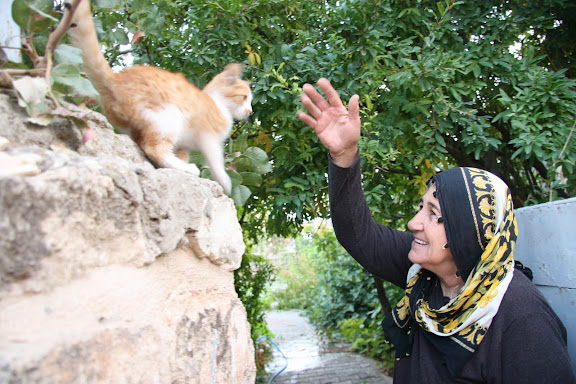
If you have a similar travel tale, please share it.

 Click here to see Lois’ photo gallery of her Turkey trip.


, , , , ,
January 15, 2012 at 5:13 pm Comments (3)

Still the Earth remains

About a year ago, I wrote the following  for a local chapbook that didn’t end up getting published and have decided to share it here instead.


In my dream, you were the same whale that I saw: that message was clear.

A whale in a night vision, some sources say, helps the dreamer overcome fear, especially of death. You, dad, came to me in silence, from the sea, that realm of dark depths that Jung called a vast swell of emotion. I understood. You had transformed.

In the week after you died, I dreamed of the grey whale, saw the large dorsal fin, a white triangle of barnacles, bobbing too close to the beach in Davis Bay. In daytime life, I had grumbled at the cars stopped bumper to bumper one August morning, clogging the bay, not knowing who was blocking traffic. Then I saw everyone staring, out to sea, in the same direction. Whale: the one I had never seen for months, while others gloated or exclaimed over their sightings. The whale was at Roberts Creek beach all day Sunday. You missed it. A friend in Halfmoon Bay on the phone: I can hear him. Oh, there he is right now.

At last, when I had my glimpse of the sea creature rocking slowly, its languid movements swishing the ocean surface into an oval of flat water, I stopped, parked, and crossed the road in Davis Bay to gawk. I didn’t even take out my camera. I wanted to witness it directly, without a barrier, to honour such animal presence without the capture-the-moment eye that distances and objectifies, to share an open gaze of respect for this rare beast for here.

In my dream, I wasn’t sure how to respond to your whale visit. With the slow thrust of a fin you were there, then gone. Was this image meant to reassure me? Beyond the sea, where did you come from?

I worried about the real whale. It stayed between the beach and the floating raft, only about five metres offshore, in such shallow water that I feared it would beach itself. Scientists say that when whales stay close to land, they are sick or dying.

While you lay dying, you spoke from fantasy worlds fuelled by pain medication. I tried to enter these realms by talking into them with you. You thought that you were a prisoner of war, about to get released. Three weeks before your death, you were ready to go, but I did not know then, even though I’d read a book on the symbolic language of the dying.

From the beach, I could share others’ excitement at seeing such a huge marine mammal, but still worried. Last year, more whales and dolphins visited our coast than in many decades past. The ocean waters are warming. Did climate change bring us this cytacean celebrity? In multiple cultures, a whale is a swimming library, keeper of the records and history of Mother Earth, the next sign of Earth changes.

I did not see the grey whale again. I looked for it and longed to view it, but like you, it had gone.

Now I mourn for the whale’s magnificence and you. You both came to me, free in a timeless, fluid mass. You have transformed. Where will the whale end up? Still the Earth remains.

, ,
January 7, 2012 at 11:46 am Comments (2)

The Writers’ Hub: Local authors share their words


  — Linda Williams photo                                                       — Hugh Macauley photo

Gracie & I at the Arts Crawl                Part of my first audience for a Gracie mini-reading

                                                                                                             — Heather Conn photos

I had fun last weekend introducing Gracie the goldfish, the star of my new children’s book, Gracie’s Got a Secret, at the 2011 Sunshine Coast Arts Crawl in British Columbia, Canada. I was one of 15 local authors who was on hand at The Gumboot Café in Roberts Creek to chat with both residents and tourists, give mini-readings, and sell books, of course.

 Shelley Leedahl gives a mini-reading

I enjoyed reading the first few pages of my book to young readers who sat on the steps in front of me at the microphone. Since this is my first children’s book, this is a whole new audience for me to reach. Shelley Leedahl, a poet, fiction, and creative nonfiction author newly moved to the Coast from Saskatchewan, also read from her delightful children’s book The Bone Talker. Published by Fitzhenry & Whiteside in 2005, and with images by Bill Slavin, one of Canada’s top book illustrators, this poignant story has won the Saskatchewan Book of the Year Award.

Michael Maser, author of Learn Your Way!

Our Writers’ Hub event, organized by Creek author Jane Covernton, featured the “soft” or unofficial launch of three local books: Gracie’s Got a Secret, Jane’s own Healing Herbs to Know and Grow, and Michael Maser’s Learn Your Way! The published works of these additional local writers were also available: Terry Barker; Shelley Harrison-Rae; Gillian Kydd; George Payerle; Dorothy Riddle; David Roche; Andreas Schroeder; Dot Scott; Marina Sonkina; and Susan Telfer. I shared a table with volunteers from the Sunshine Coast Conservation Association, who were selling their book The People’s Water, and their photographic calendar.

 Jane Covernton reads her poetry, with her new herb book, visible to her right.

From poetry and prose, to self-published work and books of international acclaim, this two-day literary event celebrated the voices of independent publishers and the power of meeting and hearing authors in person – fresh and first-hand storytelling, rather than just reading a tale on a screen. Besides locals and friends, we had visitors from California and Seattle. Collectively, we sold 92 books over two days, from display tables available from 10 a.m. to 6 p.m.

Thanks, Jane, for all of your hard work in organizing and setting up such a successful event. Since writing can often be a lonely pursuit, it was wonderful to connect with other scribes and share our written words with others.


, , , , , , , , , , ,
October 29, 2011 at 4:29 pm Comment (1)

Gracie’s ready to greet the world

This week, I received copies of my new kids’ book, Gracie’s Got a Secret, delivered straight from the printer.  It’s a thrill to show it to people and hear them admiring the illustrations. So far, I’ve only had responses from adults. The true test will be how children react to it. This is a new audience for me — I’ve never written a book for kids before. I look forward to sharing the book with listeners and readers of all ages.


I’ll be curious to see if kids “get” the book and understand its underlying message of “Let go and go with the flow.” I figured that if children could adopt this approach to life, it could save them a lot of anguish when they’re older.


Now, the process starts of “birthing” the book to the public, getting it out to bookstores and media and into people’s homes.  I’ve got a soft launch planned for Saturday, Oct. 22, as part of the Sunshine Coast Arts Crawl. The official launch, which will feature puppets and storyteller John Conway, will be on Saturday, Nov. 26 at the Sunshine Coast Arts Centre in Sechelt.  See my Gracie events page for details. To stay informed of author readings and other ongoing activities, become a Facebook friend of Gracie’s Got a Secret.

, , , ,
October 8, 2011 at 1:10 pm Comments (3)

Social media: Have we forgotten the “real” world?

At a social media seminar I attended this week in Vancouver, one of the presenters said: “The real world is so key.” She was referring to live-blogging events. I had to laugh at the irony. We have to be reminded to participate in activities that occur beyond cyber-reality? How sad.

As a writer and communicator, I firmly acknowledge the value of the Internet and social media in connecting with others and sharing information. But if this activity ends up alienating and isolating us from the flesh-and-blood world, it’s ultimately substracting from, rather than adding to, our lives. Do we chat with a near-stranger online, or visit a real friend face-to-face in a cafe? Do we choose to email rather than phone someone? Are personal encounters diminishing, replaced by Tweets and cyber-dialogue?

I think of family trips we took when I was a child. While driving through spectacular scenery, from the Petrified Forest and Painted Desert in the U.S. to the orange-red canyons and mesas of Arizona, my mom had to repeatedly urge my sisters and I to look out the window and admire the view. We were often too engrossed in some card game or crossword puzzle in the back seat to even notice what was around us. Unwittingly, we were shutting out the world and our relationship to nature. (This was many decades before the term “nature deficit disorder” was coined.)

Social media can create the same real-life siloing. On the same night as the seminar, I attended a talk and reading by musician/author Sylvia Tyson at the Festival of the Written Arts in Sechelt, BC. She read from her new novel Joyner’s Dream, which reinforces one family’s connection to music through multi-generations. In the Q&A afterwards, someone asked Tyson if she was on Facebook.

“I’m one of the original Luddites,” she replied. (That was a no.) Applause followed from at least one-quarter of the sold-out audience of several hundred. I assumed that those who clapped were honouring the value of person-to-person sharing, the kind of connection that Tyson created that night through her spoken word and recorded music.

I don’t advocate shunning the digital world. Let’s just keep it in perspective. To me, nothing beats the unadulterated, non-enhanced connection, in person, with people and nature. Once we’ve stopped valuing that relationship, and making time for it, we might as well become heartless cyborgs.

, ,
August 6, 2011 at 10:49 am Comment (1)

Developing nations deserve more than “Third World” term

For decades, I’ve used the words “Third World” without thinking too much about the term. I recently wrote it in a magazine feature I was doing about people who had volunteered in different countries in Latin America and elsewhere.

After submitting the article, my editor told me that his workplace preferred the term “developing world.” I thought about this, and I agreed. The term “Third World” does have a paternalistic tone and I realized that I didn’t even know its origins.

Time for a Google search. Wikipedia explains that the term “Third World” appeared during the Cold War. It referred to countries that weren’t aligned with capitalism or the allies of the North American Treaty Organization; the latter were the “First World.” How’s that for political branding? I see now how presumptuous the language is.

The “Second World” were communist allies and the Soviet Union. So, ideology  determined the pecking order of nations. Fear, so prevalent during the Cold War, helped to cement this us-versus-them outlook and form of identification.

I’m sad that I didn’t think sooner about the associations of the term “Third World.” Such labels and unnecessary divisions serve to further a sense of global separateness, rather than connectedness. I’m glad that my editor paid attention to the language I used and offered a more current, compassionate alternative.

, , , ,
July 14, 2011 at 4:53 pm Comments (0)

What’s in a head? A typo of privilege

As an editor, I find it hard to turn off the part of me that zooms in on a typo in anything from a menu to a marquee. Well, I spotted a whopper a few weeks ago in a full-page ad in The Vancouver Sun, which left me shocked at its size and brazen irony.

The four-colour advertisement, by Polygon Homes, featured a sexy young couple, dressed in black attire, as if for an upscale soiree. They stood poised between two fancy, black, wrought-iron gates, which opened onto an immaculate lawn, trimmed hedges and trees, suggesting the entrance to a palatial estate.

The ad was promoting a new real estate development, Mayfair Place, in Richmond, BC as “a collection of Georgian-inspired apartment homes.” The ad copy read that these new homes were “evoking the sophistication of London’s prestigious Mayfair district, in a sought-after location that’s just minutes from hundreds of popular shops and services.”

Okay, I get the message: these places are supposed to be classy, trendy, and full of status power. Well, guess what? Having money and a position doesn’t mean that you’re literate.  (Just ask George W. Bush.) The ad’s bold headline, which appears in at least 48-point type (about a half-inch high), reads “A Priviledged Place.”

When I first read the head, I thought that maybe they were doing a deliberate play on words but no, it’s one giant — and expensive — boo-boo. How many people looked at that ad before it went to print and never spotted this large spelling mistake, exposed in three words on a single line? So much for the power of suave images. The two models in the photo might as well have eggs dripping off their chins onto their polished attire. 

We all make mistakes, I know, but some are bigger, and more public, than others. I wonder what Michael Audain, the boss of Polygon Homes and an art collector who sits on the board of the Vancouver Art Gallery, thought when he saw this all-too-obvious error.

I love the irony of this goof, because it reduces the impact of the ad almost to a spoof, making a complete mockery of its attempt to promote wealth and success.

April 3, 2011 at 6:00 pm Comment (1)

Write it raw

Several writers around me recently complained of writer’s block. This frustrating state of non-word flow usually occurs when someone is determined to write specific content in a certain way, but his or her deeper self is saying: “No, let’s go this different way, because that’s what you truly want to say.” If the writer ignores this inner prompt, writer’s block will set in.

The solution? Let go and surrender to what wants to come out. This can be a scary about-face for those who never start writing without an outline first. It might even require switching genres. Whatever the change, the words that flow will ring rawer and truer than those you tried to constrain with a structure that didn’t fit.

I recommend Victoria Nelson’s book Writer’s Block and How to Use It. Natalie Goldberg’s free-writing exercises in Wild Mind and Writing Down the Bones also provide inspiration for loosening your mind’s hold on words. This process works — I’ve done it for years. Try it, and let me know how it worked for you.

 *                                       *                                     *                                 *                                   *

To use writing as a spiritual practice requires immersing yourself in the unknown. Rabbi Rami, who runs a creative writing program at Middle Tennessee State University, provides three rules for this kind of writing:

  • Don’t write what you know
  • You can’t write what you don’t know
  • You must write.

Gee, and I thought that “What’s the sound of one hand clapping?” was enough of a mind-twist. His first rule — “Don’t write what you know” — jarred me because that contradicts the advice that every writer learns: “Write what you know.” Yet, I get it. We need to be humble enough to know that we don’t have all of the answers. We need to be okay with not knowing where we’re headed, and to trust that our words will get us there. As Rami says: “Authentic spiritual practice . . . is about living outside the system, any system.”

He recommends that you keep writing until you find something “deeply, disturbingly troubling,” until you’ve shattered all of your expectations, and then you marvel. I can attest to this. I’ve been working on a disturbing book intensively for almost four years; I started it about twenty years ago. It has been the most challenging and painful writing I have ever done, but also the most rewarding and freeing. As Rami says: “[T]here is a liberating wisdom in insecurity.”

Writing as spiritual practice is writing to be free, not necessarily publishable or even good. One of Goldberg”s rules of writing is “Give yourself permission to write the worst junk in the world.”  I like that. Now if only I could do that when I’m on deadline . . .

March 15, 2011 at 8:37 am Comments (0)

« Older PostsNewer Posts »